2024 Neponset River Report Card
While the mainstem of the Neponset River and ponds are doing well, watershed tributaries still face threats from road runoff, sewer defects, and pet waste.
In mid-June, the Neponset River Watershed Association released its 2024 Annual Water Quality Report Card, in partnership with the Charles River Watershed Association and the Mystic River Watershed Association.
These grades represent bacteria levels throughout the watershed and how safe swimming and boating are on these waterbodies.
This year’s report card shows that the Neponset’s biggest challenge remains polluted rain runoff—especially in smaller tributaries that flow through highly developed neighborhoods. Water quality grades drop by an average of 27% on rainy days, nearly two full letter grades.
In these brooks, polluted rain runoff from streets, parking lots, and yards, as well as sewer system defects in a few isolated locations, make swimming or boating unsafe due to health concerns.
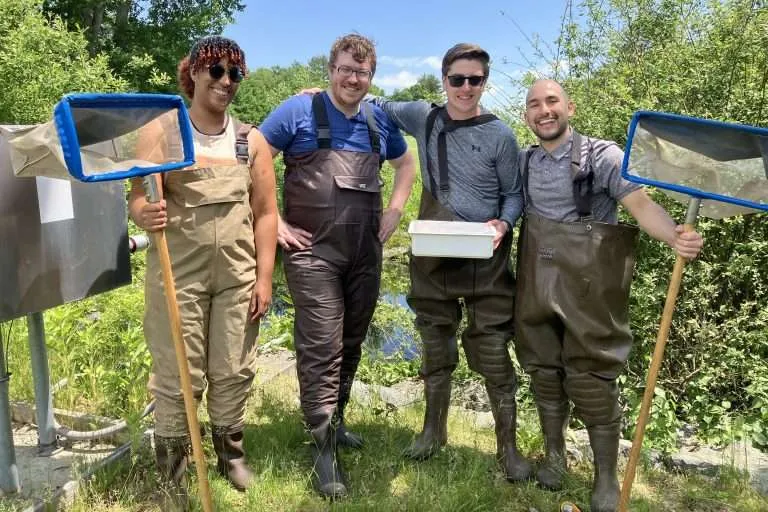
The report card shows the results of the last 3 years of water samples taken through NepRWA’s Community Water Monitoring Network (CWMN), our partnership with X-Cel Conservation Corp, and Estuary data collected by the Massachusetts Water Resources Authority (MWRA).
Water samples were collected between May and October from 2022-2024, and represent how often the water is safe for swimming and boating from a bacteria perspective.
Most monitored ponds in the Neponset Watershed earned an “A,” and the mainstem of the River, where most recreation occurs, scores in the low “A” or high “B” range.
This means that these sites were generally safe for swimming and boating, at least where bacteria are concerned (scroll down to learn more about what A, B, C, D, and F mean).
In addition to bacteria, NepRWA also tracks dissolved oxygen and phosphorus, which are important for fish, wildlife, and recreation.
The grades in the Neponset are slightly better than in previous years (See 2023 Report Card), largely due to including fewer rainy year samples.
The past several years in the Neponset have alternated between drought (2020, 2022, 2024) and rainy years (2021 and 2023), which both cause issues to wildlife and create challenges for fixing systemic issues.

Media:
- Press Release
- WBUR article: “Boston rivers are cleaner. But sewage, climate change threaten progress” (June 17, 2025)
If you have any questions about the Water Quality Report Card, please contact NepRWA River Restoration Director, Sean McCanty, at mccanty@neponset.org.
What’s in a Grade?
The report card grades are based on Massachusetts standards for swimmable water and less stringent criteria for boating, defined by all three of the Boston Harbor watershed associations.
In freshwater, E. coli is used to determine suitability for recreation, while in the salt or brackish waters of the estuary, Enterococcus species are used. All NepRWA collected data relies on E. coli concentrations, while MWRA data uses Enterococcus.
The grades reflect the number of sampling events that either met boating standards (50% compliance) or both swimming and boating standards (100% compliance) over the last 3 years.
The multiple factors that affect water quality and the bacteria “grade” of the Neponset River include:
- Stormwater runoff occurs during rain events and washes contaminants such as dog waste into streams and ponds via storm drain systems.
- Leaking sewer pipes or sanitary sewer overflows, which allow raw sewage to flow into streams and ponds.
- Poorly maintained septic systems, which allow bacteria and chemicals to flow from groundwater into streams and ponds.

While useful, we caution that compliance scores can only tell you how often the standards are met on average and cannot replace your own good judgment about the safety of recreation.
In general, we recommend avoiding water-based recreation, especially swimming, directly following rainy days, as E. coli levels typically spike then.
Partnerships Make a Difference!
NepRWA relies on volunteers and municipal partnerships to help fulfill our mission to clean up and protect the Neponset River, its tributaries, and surrounding watershed lands.
Community Water Monitoring Network (CWMN)
Our CWMN Program involves the help of dozens of dedicated volunteers, who take water samples from May through October from 41 sites across the Neponset River Watershed.
The water quality data gathered from the volunteer samples provides valuable insight into the health of the River and helps to identify where we need to focus remediation efforts.
Click here to view the interactive CWMN Data Viewer.
X-Cel Conservation Corp (X-Cel)
Additional data is collected by X-Cel with NepRWA staff and MWRA routine sampling in the Neponset Estuary. MWRA also provides bacteria and nutrient laboratory analysis for the CWMN program.

Neponset Stormwater Partnership (NSP)
Our NSP Program is a regional program that aims to reduce the cost and increase the effectiveness of municipal stormwater management programs through regional cooperation and resource sharing.
Partners include the towns of Canton, Dedham, Foxborough, Medfield, Milton, Norwood, Quincy, Randolph, Sharon, Stoughton, and Westwood, along with the Metropolitan Area Planning Council (MAPC).
Learn more at yourcleanwater.org

Residents and business owners can take the following steps to reduce polluted rain runoff:
- Always pick up after your dog and throw the waste into a trash can.
- Reduce the use of lawn chemicals.
- Build a rain garden that naturally filters pollutants.
- Redirect downspouts toward the lawn, garden, and shrubs.
- Clean up spills, like fertilizer, pesticides, and motor oil, from driveways and sidewalks.
- Wash cars on the lawn so that water filters into the grass.
- Use pervious materials when building walkways, patios, or driveways.
- Install a rain barrel to capture roof runoff.